
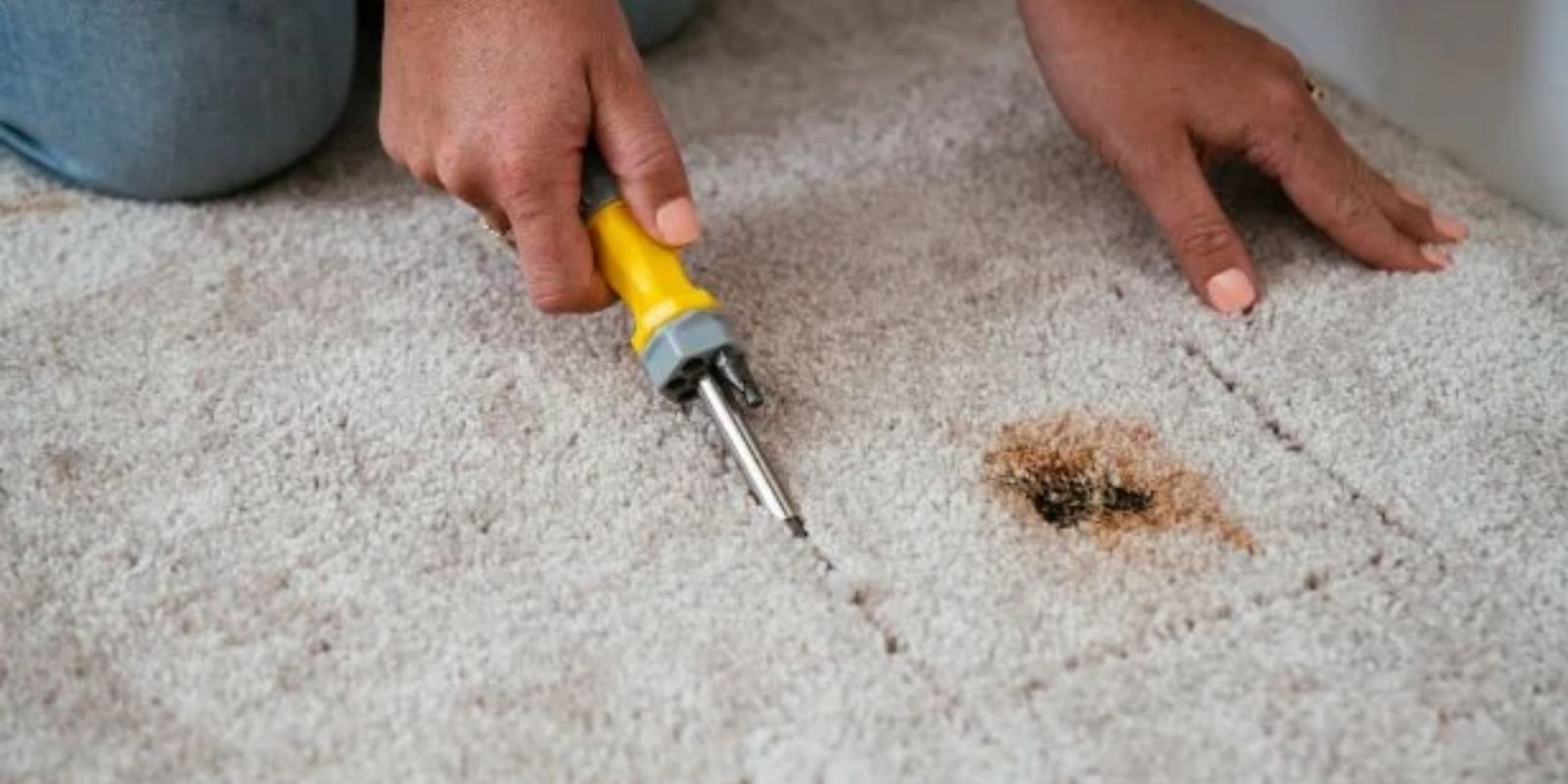
Just imagine you go into your living room after having a hard day and you see a large spot of bleach on the floor- right in the middle of the room where everybody can view the spot. It is bleached to a pale, ugly spot and your eyes are fixed on it whenever you enter the room. Perhaps it was an accident in cleaning. Perhaps a bottle overbalanced only two seconds. In any case, the carpet appears just to be ruined, although the floor may be in excellent condition. The positive side: the majority of the damage to the carpets does not entail a complete replacement. The modern carpet repair service takes the form of repairing only the damaged part using carpet patching, seam repair, fibber reconstruction, odor treatment, and power stretching. Understanding the process of repairing each kind of damage will allow you to use restoration rather than spend thousands of dollars on new flooring.
Pet Damage Repair: Fixing Claws, Urine, and Torn Carpet Fibbers
Animals are the leading cause of carpet damage in houses. Dogs scratch around the doors, cats scratch around the corners, and repetitive behaviours leave tattered edges of the carpet, pulled loop, and thin areas of bald spots which rapidly extend. The most important thing with pet damage is preventing the unravelling before it gets into a larger patch. The repair of professional pet damage often begins by carefully examining the carpet pile, back, and adjacent seams. When the fibber is shredded or lost, technicians usually perform a patch repair on the carpet: the damaged area is cut out in a clean and tidy fashion and then a corresponding piece of donor (leftover carpet or a concealed space such as a closet) is used to replace the damaged area. The replacement is set to fit in the direction of the pile and fibber density and is bonded with seam tape and adhesive latex to fit flat. Urine is another issue as it is not only on the surface. The urine of pets may penetrate the carpet, padding, and even the sub-floor, causing permanent smell and staining. Having an appropriate professional attitude is not about smelling things with perfume—it is about cleaning up the contamination. That may include carrying up the carpet, replacing the pad that was affected, and enzyme odor neutralizers, which neutralize the urine compounds rather than conceal them.
Bleach Spot Carpet Repair: Restoring Colour and Fibber Integrity
Damage caused by bleach is annoying since it is not a rinseable stain. It’s chemical colour loss. Once the colour is removed, it is not restock able even with the help of normal cleaning. There are usually two options between the methods employed by professionals depending on the size and condition of fibers :1) Carpet dye correction
In cases of small bleach spots, the technicians may recolour the area with fibre safe carpet dyes. The difficulty lies in getting the correct shade of your carpet and this can sometimes involve mixing several colours. An experienced technologist uses the dye to the extent that the repaired section is equal in both tone and colour without bleeding into the surrounding fibbers.
2) Replacement of the sectional carpets.
Patching is normally a longer-lasting solution compared to bleach in case of a large bleach spot or because bleach has caused the fibbers to become fragile. The technology cuts the damaged part, replaces it with an exact sized piece, and seals it with invisible seam bonding equipment so that the patch becomes invisible in the floor.
Water-Damaged Carpet Repair: Preventing Meld and Structural Damage
A plumbing leak, overflow of a dishwasher, a drip of the roof, or flooding will cause water damage. And the most dangerous thing is not only the wet carpet, but what transpires beneath it. Padding enclosed moisture causes the growth of moulds, musty smell and delamination of the carpet backing (layers peeling off, carpet losing its structure).
Repair of water damage may involve:
- High-suction device to remove moisture out of pad and fibbers using water.
- Quick drying using commercial air movers and dehumidifiers to avoid the mold.
- Replacement of padding in the case of dampness, compression, or pretentiousness of the pad.
- Cleaning the subfloor in case of dirty/ grey water and when odors remain.
- After drying to flatten the ripples, power is stretched to recover a tight fit that is flat.
When the carpet wrinkled when the water was added, it is not just cosmetic. It is normally an indication that the carpet enlarged and moved. It is re-stretched by a professional on a tack strip in the right position to ensure that the carpet does not continue buckling or become a source of tripping.
Carpet Burn Repair: Fixing Iron, Cigarette, and Heat Damage
Burns can be more rapid than one might think, hot irons, hair tools, candles, embers, even contact with the heater. Damage due to burning is typically melted, hardened, or burnt fibbers which cannot be washed away.Fiber reconstruction can be useful in fixing smaller burns. The technician cuts away the scalded ends and replenishes the lost tufts with fibbers of donor parts. Such fibbers are bonded with high precision to ensure that the texture of the area is the same as the rest of the carpet. Bigger burns are normally treated with a plug repair or patch. A hole of a circle or square shape is made and a piece of the same shape is cut and inserted and bonded in with a seam roller and the seam tape that require heat to activate. Matching pile direction is the strongest detail, which even the best match of the colour should indeed appear as wrong—when fibbers are upside down
Carpet Seam Repair: Fixing Separation, Fraying, and Loose Edges
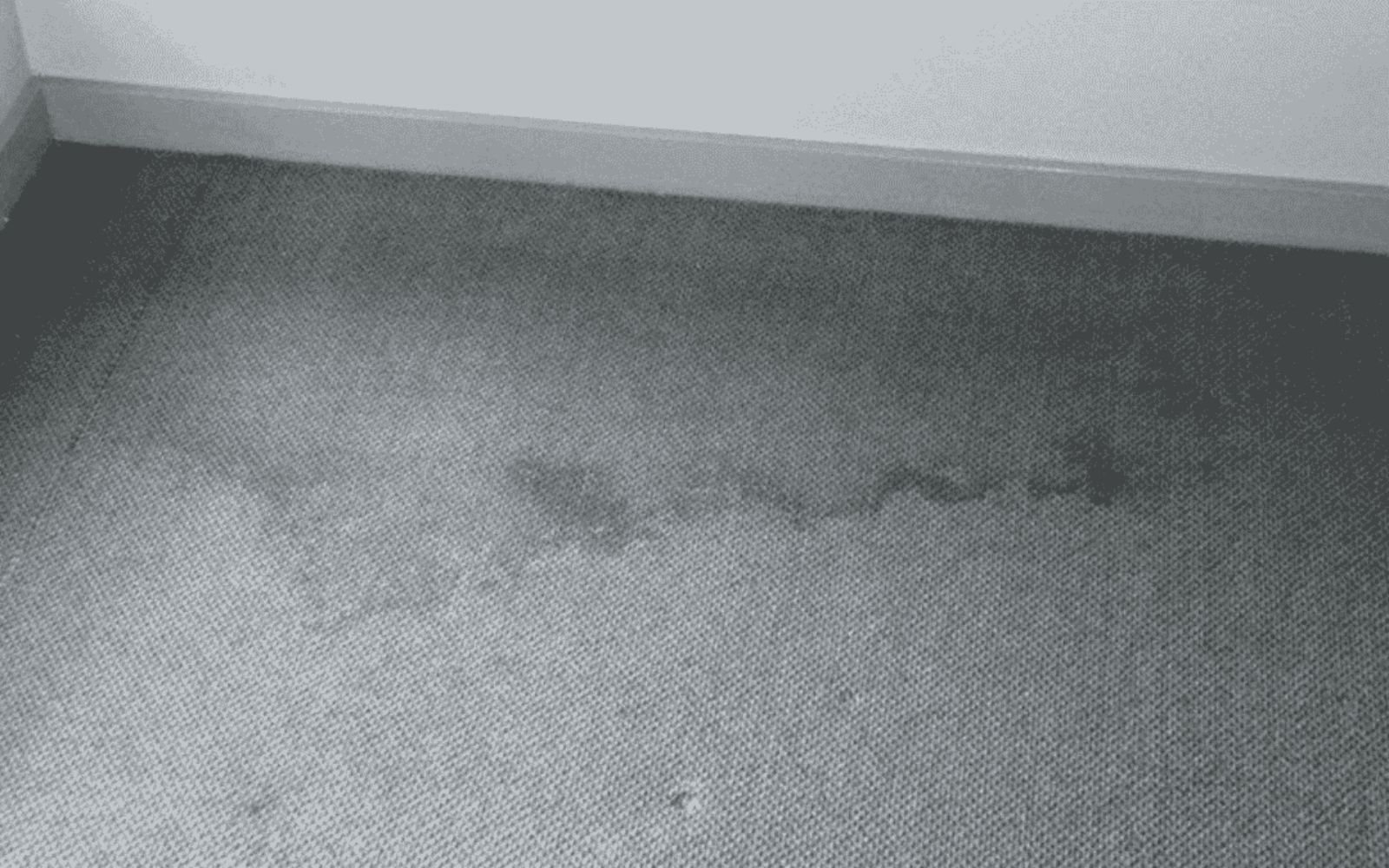
Where two pieces join is where a seam fails, and you will be able to see gaps, lifting edges and fraying lines, all catching shoes or vacuums. Reasons are high pedestrian traffic, incorrect original installation, low adhesive quality of the seam or movement due to moisture. Repair is a professional seam repair that requires one to open the seam with a lot of care, remove any old residue, and reconnect it with fresh heat-bond seam tape and an appropriate seam iron. The sides are joined, stamped, and curled so that the fibbers are clamped together–not only glued over. An aptly sewn seam replaces the appearance and the integrity of the carpet such that it does not get caught up once again.
Conclusion
Carpet damage doesn’t automatically mean full replacement. Issues like pet damage, bleach spots, water exposure, burn marks, and seam separation are often repairable. When you want a repair that blends naturally, holds up under foot traffic, and doesn’t create new problems later, professional workmanship makes all the difference. If your carpet has visible damage and you want a reliable restoration solution, Sun Carpet Stretching provides expert repair for bleach spots, pet damage, burn marks, water damage, and seam separation—helping restore your carpet to its original condition without the cost of full replacement.